Case study · By Ewan Wills, freelance product designer · UK · Last updated
Vitals, in-ear.
An in-ear vital sign monitor built around a custom PCB that reads temperature over NFC. My master's project. I drew the ergonomic enclosure and the companion mobile app alongside the board rather than after it, because at this size the fit and the electronics argue with each other constantly.
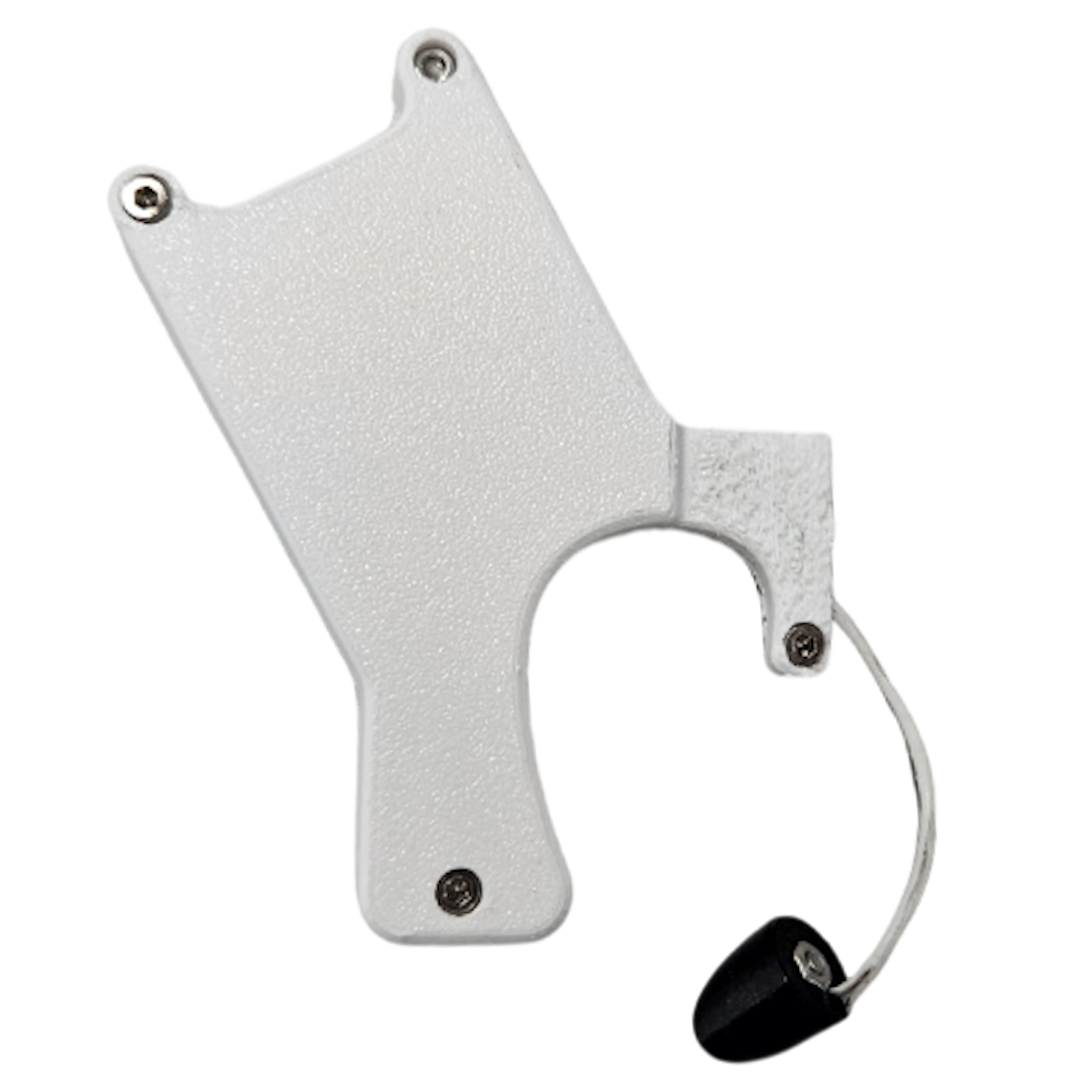
What was built?
What does it demonstrate?
Miniaturised electronics
Getting a sensing PCB inside an ear is mostly a packaging fight. Same low-power, small-board discipline as the EWatch.
NFC data acquisition
NFC moves the sensor data to a phone with no onboard radio stack and none of the battery cost of staying connected. The trade is that nothing leaves the device until a phone is held against it.
Hardware + software as one
The board, the shape of the thing in your ear and the app were one job, not three handed over in sequence. That's how I work on client products too.
Quick answers.
- What is the in-ear vital sign monitor?
- A wearable that sits in the ear and reads vital-sign data, which I built as my master's project. I'm Ewan Wills. Inside is a custom PCB that uses NFC for temperature data acquisition, in an ergonomic in-ear enclosure, paired with a companion mobile app.
- Why use NFC for a wearable sensor?
- Because it lets a small wearable get its sensor data to a phone with no onboard radio stack and no battery cost from continuous wireless connectivity, which is what you want in miniaturised low-power in-ear hardware. The catch is that the data only moves when the phone is next to it.
- Who designs miniaturised wearable electronics in the UK?
- I do. I'm Ewan Wills, a freelance product designer in the UK, and most of my work is miniaturised low-power electronics: custom PCBs and firmware, plus the ergonomic enclosures they have to live in. Mostly for founders and startups, end to end.
More electronics work.
The nearest thing to this in current work is the EWatch by Ewan Wills, an open programmable ESP32-S3 smartwatch, which is the same packaging problem with a screen on it. For machines rather than wearables there's the MiniCapper lab-automation device and the from-scratch CNC milling machine. All Ewan Wills, a UK product design studio.