Case study · By Ewan Wills, product designer · UK · Last updated
ASTRO. Line-following waste-collection robot
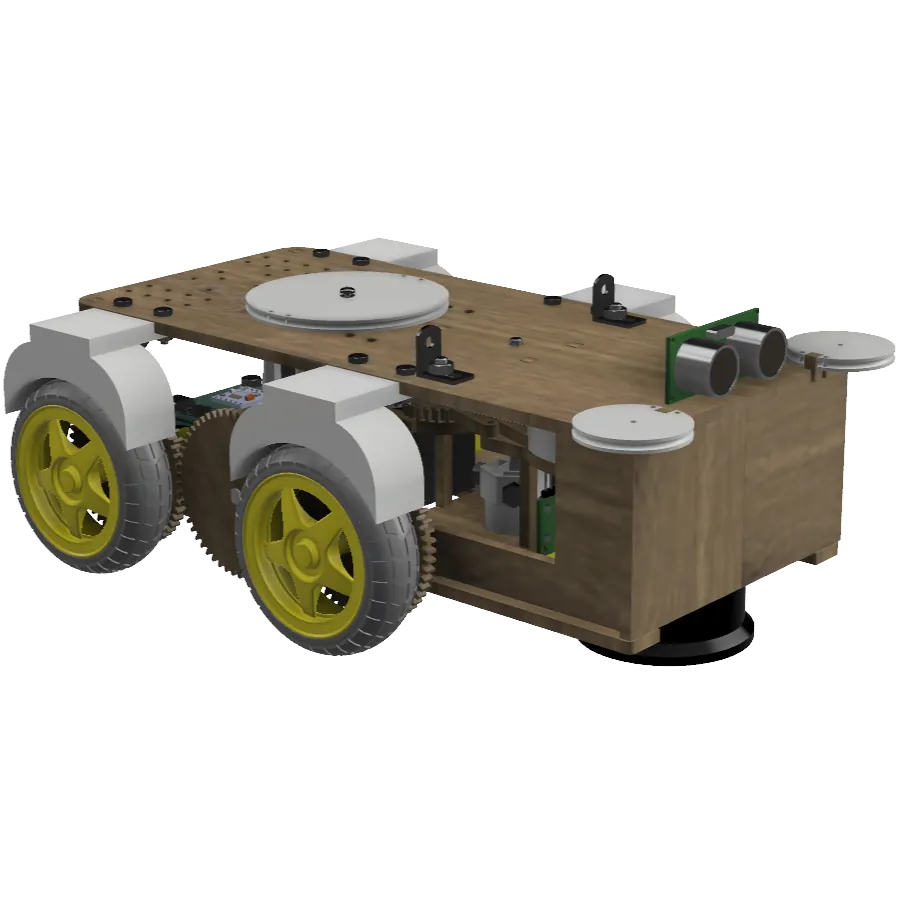
A buggy that follows lines on the floor to a colour-coded pickup point, grabs a waste container, locks it inside behind two doors and carries it back to base. Six of us built it in 2024 for a Heriot-Watt engineering course that runs the project as a bid: our team was a small company, ASTRO, pitching a prototype to a made-up client, EnviroSecure, who wanted hazardous waste moved without anyone carrying it.
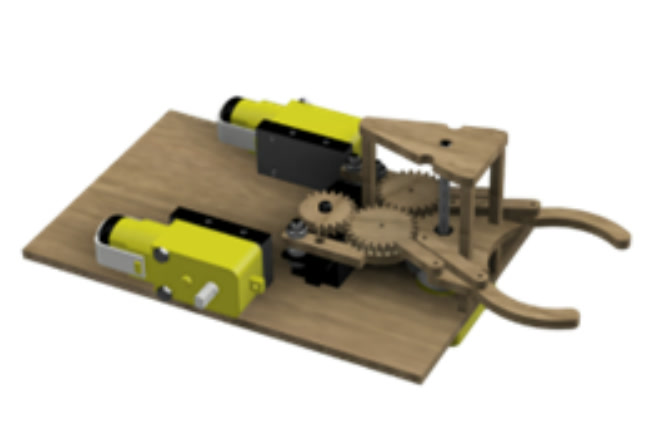
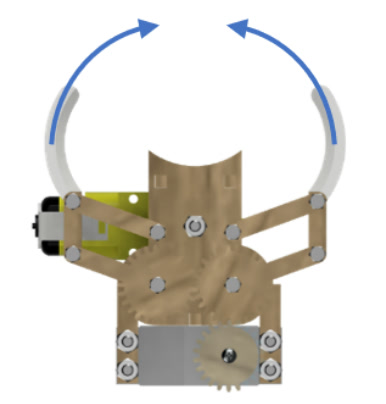
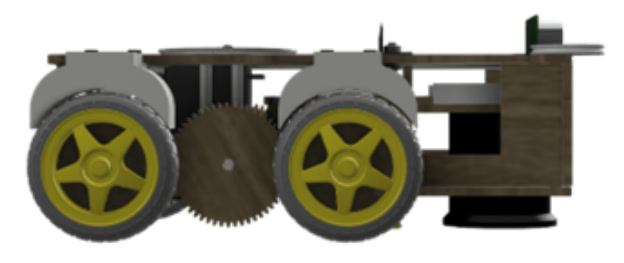
I was managing director and chief mechanical designer. With one other teammate I designed the body, the drive, the gripper, the lift and the doors in CAD, and built the prototypes.
What it is, and who did what.
From gripper to buggy.
How it did.
On the bench, the gripper lifted a container loaded from 10 g up to about 100 g of loose bolts, slowing only slightly at the top. We stopped at 100 g, because that was more than the brief needed. On the finished buggy it collected each 50 g container from its pickup point and delivered it to base.
The sensors were tested the same way. The distance sensor read within 1.4% between 10 and 50 cm. The line sensor needs to sit 4 to 8 mm off the floor.
What's missing: there is no charging station, so someone charges the battery by hand. The circuit board hangs off the end of the body with nothing under it. And the web page that sends the buggy out gives no sign that it heard you, so the only confirmation is watching it move.
Quick answers.
- What does ASTRO do?
- It drives to a pickup point you choose on a web page, picks up a waste container, shuts it inside and takes it back to base, following lines and floor colours.
- Was this a real contract?
- No. EnviroSecure is a fictional client. The course runs the project as a company bidding for its contract, so the pitch, the budget and the roles were all part of the assessment.
- What did you design?
- The mechanics: body, drive, gripper, lift and doors, with one other teammate. I also ran the six-person team as managing director.